
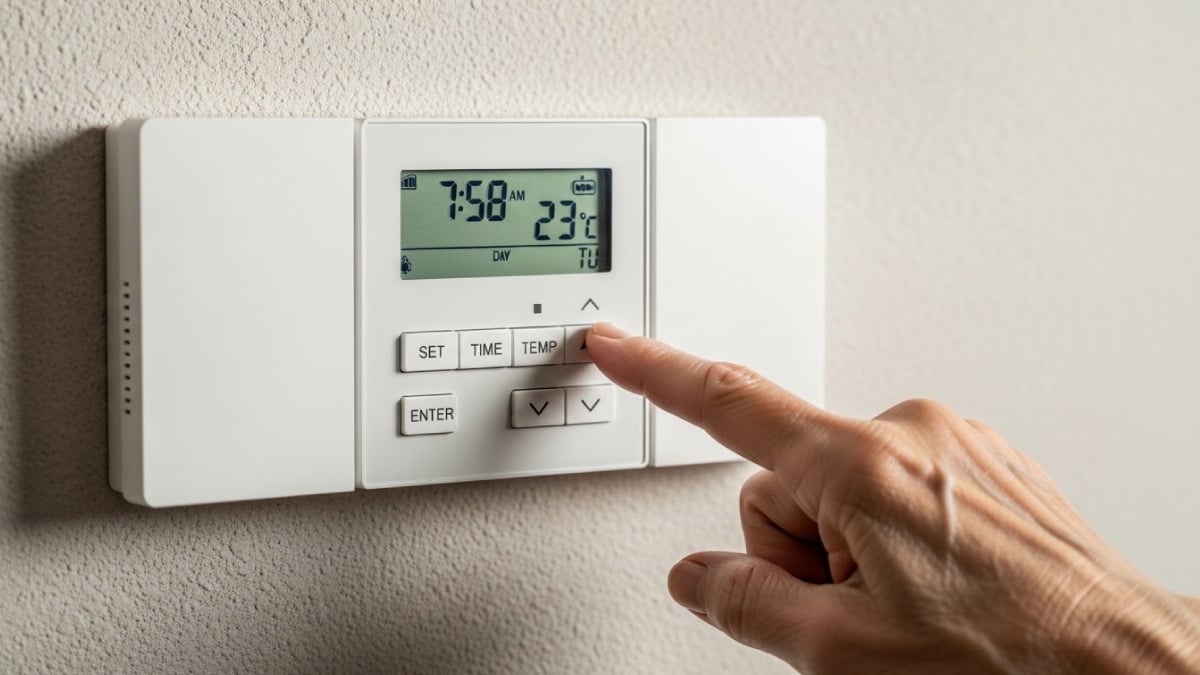
Cregger — trusted experts in heating, cooling, plumbing, and electrician — helps Metro Detroit homeowners make smart upgrades that improve comfort and lower energy bills. Choosing the best thermostat for your HVAC system seems simple until you realize not every thermostat works with every setup. Michigan homes vary widely: older bungalows in Ferndale, two-story colonials in Royal Oak, newer builds in Troy, and everything in between.
The best thermostat is the one that matches your equipment, supports your comfort goals, and fits your day-to-day routine without creating new problems. If you pick the wrong model—or wire it incorrectly—you can end up with uneven temperatures, short cycling, or a system that doesn’t run efficiently.
What Homeowners Need to Know Before Buying a Thermostat
The thermostat is the “brain” of your HVAC system. It tells your equipment when to turn on, how long to run, and when to stop. But different HVAC systems communicate in different ways. Compatibility matters more than brand or fancy features.
Before you shop, think through three basics:
- What type of heating and cooling do you have?
- Do you want basic control, scheduling, or smart features?
- Does your home have comfort challenges like hot/cold spots?
Answering those questions first keeps you from buying a thermostat that doesn’t fit your system.
How Do I Know What HVAC System I Have?
If you’re not sure, you’re not alone. Many homeowners know they have a furnace and AC, but not whether it’s single-stage, two-stage, variable-speed, or a heat pump.
Here are common setups in Metro Detroit:
- Furnace + central AC (very common)
- Heat pump (more common in newer or upgraded systems)
- Boiler + separate cooling system (common in older homes)
- Ductless mini-splits (common in additions and comfort upgrades)
If your system includes a heat pump or multi-stage equipment, thermostat selection is especially important because control logic affects comfort and efficiency.
Why Compatibility Comes First (And What Can Go Wrong)
A thermostat that isn’t compatible can create frustrating issues, like:
- The heat pump running in the wrong mode
- The backup heat coming on too often, driving up bills
- Short cycling that wears out components
- Poor humidity control in summer
- Uneven temperatures because staging isn’t managed correctly
That’s why the “best thermostat” is not universal. It’s best for your specific equipment and home.
Basic vs. Programmable vs. Smart: Which Fits Your Life?
Thermostats typically fall into three categories. None are “bad,” but each fits different needs.
Basic thermostats
These are straightforward: you set a temperature and it holds it. They’re reliable and simple, which some homeowners prefer.
Programmable thermostats
These allow scheduled setbacks—lower heat while you’re sleeping or away, then warmer before you wake up. This works well for predictable routines.
Smart thermostats
These can be controlled from your phone and may include learning features, geofencing, energy reports, and reminders. They’re great if your schedule changes often or you travel, but only if they’re set up correctly.
How Michigan Weather Should Influence Your Choice
Michigan has two big realities:
- Winters can be brutally cold
- Summers can be hot and humid
That means your thermostat needs to handle both extremes without causing comfort swings. In winter, aggressive temperature setbacks can backfire if your system has to work too hard to recover. In summer, humidity management matters just as much as temperature.
A thermostat with smart recovery and good staging support can keep your home more consistent—so you’re not freezing at 6 a.m. or sticky at 10 p.m.
Do You Have Hot and Cold Spots? Choose Features That Help
Many Metro Detroit homes have uneven temperatures due to insulation levels, duct design, or room placement. If the second floor runs hot in summer or a back bedroom runs cold in winter, thermostat features matter.
Helpful features include:
- Room sensors to balance comfort where you actually spend time
- Smart averaging (the thermostat considers more than one spot)
- Fan circulation settings to reduce stratification
- Adaptive scheduling so recovery is smoother
If comfort is inconsistent, the “best thermostat” is often the one that helps correct those patterns—not just the most popular model.
What About Multi-Stage and Variable-Speed Systems?
If your furnace or AC has multiple stages, you want a thermostat that supports that staging properly. Multi-stage systems are designed to run longer at lower output to maintain even temperatures and efficiency.
A mismatch can cause the system to run like it’s single-stage, which may reduce comfort and negate some efficiency benefits.
If you invested in high-efficiency equipment, make sure your thermostat can take advantage of it.
Should I Choose a Thermostat With Humidity Features?
In Michigan summers, humidity can make a 74-degree home feel uncomfortable. Some thermostats monitor indoor humidity and support equipment settings that reduce stickiness.
Humidity control isn’t magic, but it can help your system run in a way that balances comfort better—especially if your home tends to feel clammy during humid stretches.
A Step-by-Step Thermostat Selection Checklist
Use this to narrow your decision quickly.
Step 1: Identify equipment type
- Furnace + AC, heat pump, boiler, or ductless?
Step 2: Identify system complexity
- Single-stage, multi-stage, or variable-speed?
Step 3: Confirm wiring needs
- Do you have a common wire (C-wire) available for smart thermostats?
Step 4: Decide on lifestyle features
- Scheduling, app control, geofencing, learning features?
Step 5: Address comfort challenges
- Hot/cold spots, humidity discomfort, uneven airflow?
Step 6: Plan for professional setup
- Especially important with heat pumps and multi-stage systems
This checklist keeps the decision practical instead of overwhelming.
Why Professional Installation Matters
Even if you’re handy, thermostat wiring and configuration can be tricky. Incorrect setup can cause:
- Equipment running when it shouldn’t
- Safety systems triggering
- Inefficient operation and higher bills
- Comfort problems that feel mysterious
Professional installation also ensures the thermostat is programmed correctly for your equipment, so you get the comfort and efficiency you paid for.
Frequently Asked Questions About Choosing a Thermostat
Will a smart thermostat automatically lower my bills?
Not always. Savings come from correct setup, smart scheduling, and proper equipment operation. A poorly configured thermostat can reduce comfort and increase runtime.
Is it okay to do big temperature setbacks in winter?
In some homes, aggressive setbacks can cause long recovery times and discomfort. A balanced schedule is usually better for consistent comfort.
Can one thermostat fix uneven temperatures?
It can help, especially with sensors and smart scheduling, but ductwork, insulation, and airflow problems may still need attention.
If you want the best thermostat for your HVAC system, Cregger can help you select a compatible model and install it correctly for Michigan comfort. Call Cregger today for trusted HVAC service across Metro Detroit. Need help fast? Contact Cregger for same-day home service. Stay comfortable year-round—schedule your appointment with Cregger today.